







Home » Thank you
One of our students advisors will
reach out with more info shortly!
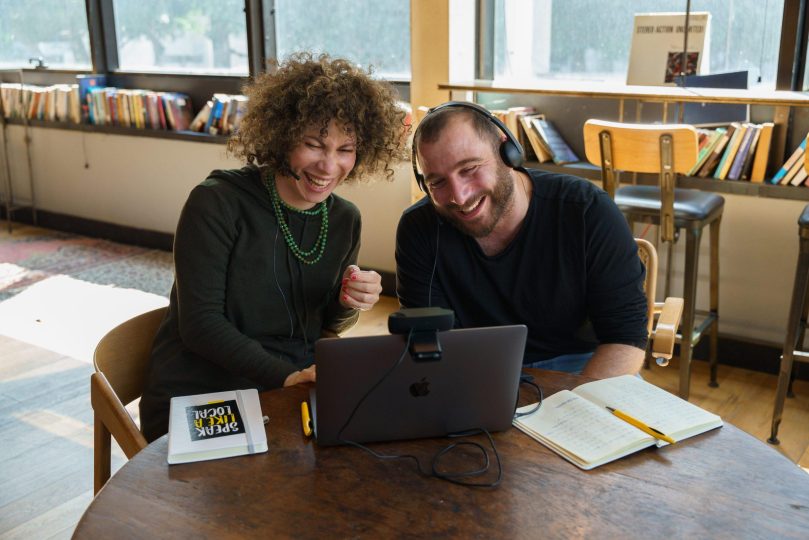
Grab a coffee and meet one of
our teachers over zoom!
Choose your preferred time for a short, 20-minute Zoom chat
Meet with one of our teachers to get a real taste of our method and find out your current Hebrew level
Learn more about our course options and prices (no guilt attached)


Yes, we could offer you a multiple-choice test and ask you to press submit to find out your level, but then we wouldn’t be seeing the full picture. Did you go to Hebrew school as a kid? Did you pick up some vocabulary words from Duolingo? What’s your pronunciation like?
Instead of a generic test, we invite you to meet us for a free level assessment with one of our Hebrew teachers over Zoom! It gives us a clearer picture of your current needs and lets you get a taste of what we mean when we say we do things differently.
The past year has been an emotional rollercoaster – moving from the shock, pain, and sadness of unimaginable events to the moments of hope we felt with each hostage coming home, each family reunited, and every soldier returning safely. Alongside this, we’ve found countless reasons to be grateful – for the incredible outpouring of support from civilians, and for the things we still hold dear, like our families, our partners, and our community. But these feelings are always mixed with the ache and despair that everyone in Israel still carries, even now.
I’d say the best way to describe how everyone around me is feeling is רגשות מעורבים (reh-gah-shoht meh-oh-rah-veem), which means “mixed emotions.” רגש (reh-gehsh) means “an emotion” in singular, but in plural, רגשות, it might sound feminine with the “OHT” ending. But here’s the catch: this doesn’t change the gender of the noun or the adjective that follows, which still matches the singular form. So, it’s מעורבים and not מעורבות. It’s just one of those quirks of Hebrew that’s tricky to explain.
!רֶגַע
(reh-gah)
!רֶגַע
(reh-gah)